
“What size solar system do I need?” has three connected answers: enough panels for the energy goal, an inverter for the intended loads, and storage for the desired backup period. Choosing everything from the dollar amount of one electricity bill can miss important details.
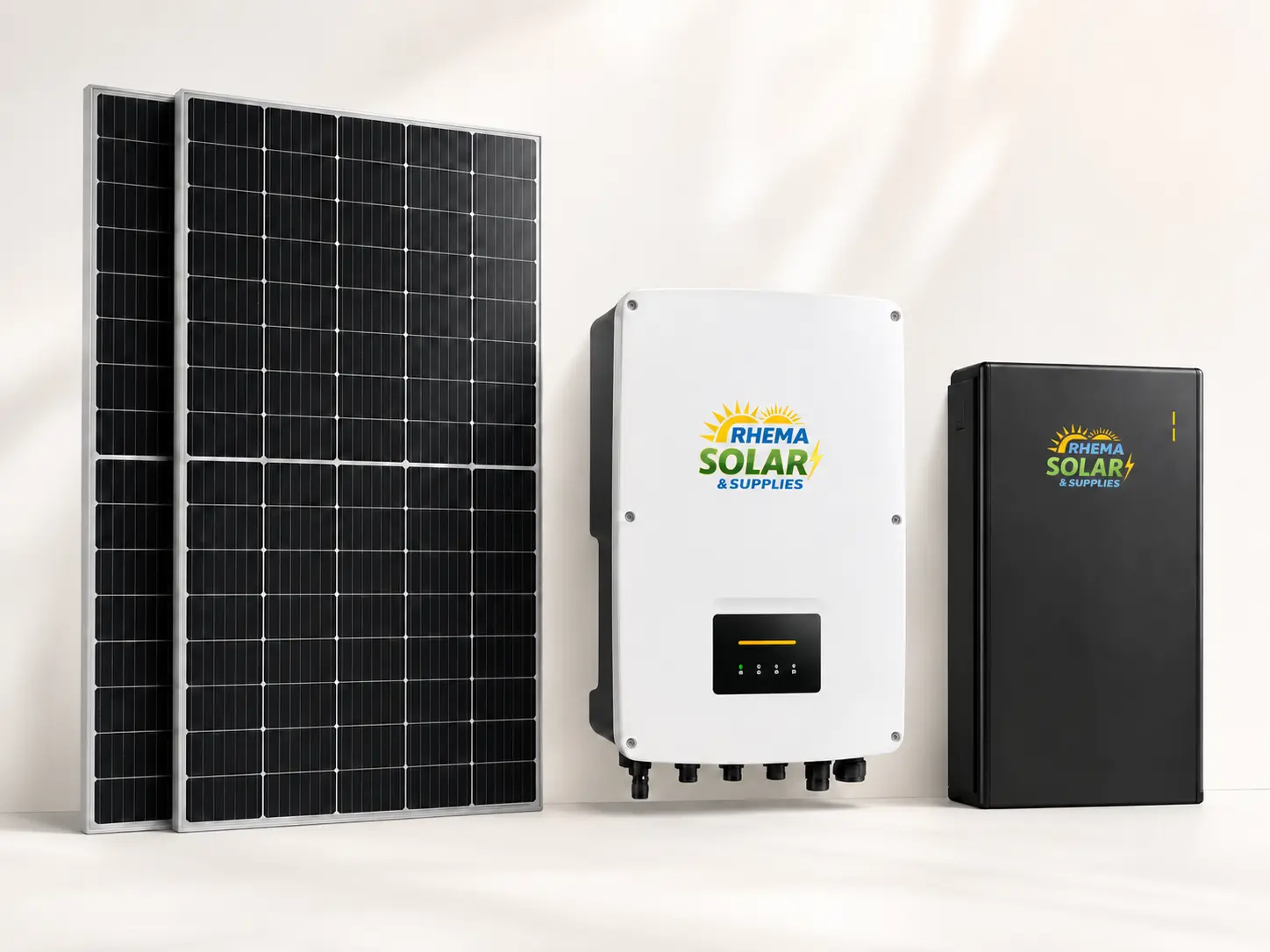
Start with consumption in kWh
Use the energy consumption shown on recent bills, preferably across a full year when available. Divide each period’s consumption by its number of days. For example, 600 kWh over 30 days equals 20 kWh per day. That arithmetic tells you average energy use, not your highest simultaneous demand.
Separate energy from power
Kilowatts (kW) describe power at a moment in time; kilowatt-hours (kWh) describe energy over time. A hypothetical 1 kW load running for four hours uses 4 kWh. Refrigerators, pumps and air conditioners can have changing demand and starting surges, so appliance labels alone may not capture their operating pattern.
Count panels accurately
Eight 625 W panels have a combined nameplate rating of 5,000 W, or 5 kWp. That is not a guarantee of 5 kW throughout the day. Weather, shading, temperature and system losses affect output. An array estimate should use site-specific solar-resource modelling rather than a universal daily production promise.
Decide what must run during an outage
List critical loads separately from optional ones. Include operating hours, future appliances and any equipment that starts automatically. The inverter’s output limits, battery discharge limits and solar-input specifications must all support the design.
Frequently asked questions
Does a 10 kW inverter mean I have 10 kW of panels?
No. Inverter output, installed panel capacity and battery capacity are separate specifications.
Can I start small and expand?
Often, but the expansion plan needs to account for inverter inputs, battery compatibility, available roof space and protection requirements from the beginning.
Use Find My Solar Fit as a preliminary starting point, then send your bills and load priorities for assessment.
Further reading
General customer education. Final equipment selection and installation must follow site-specific design, applicable Jamaican requirements and the exact manufacturers’ instructions. Examples are illustrative.