
A battery can move solar energy into the evening and support selected loads during an outage. The useful question is not simply “How big is the battery?” It is “How much usable energy and power can this exact battery deliver to my intended loads?”
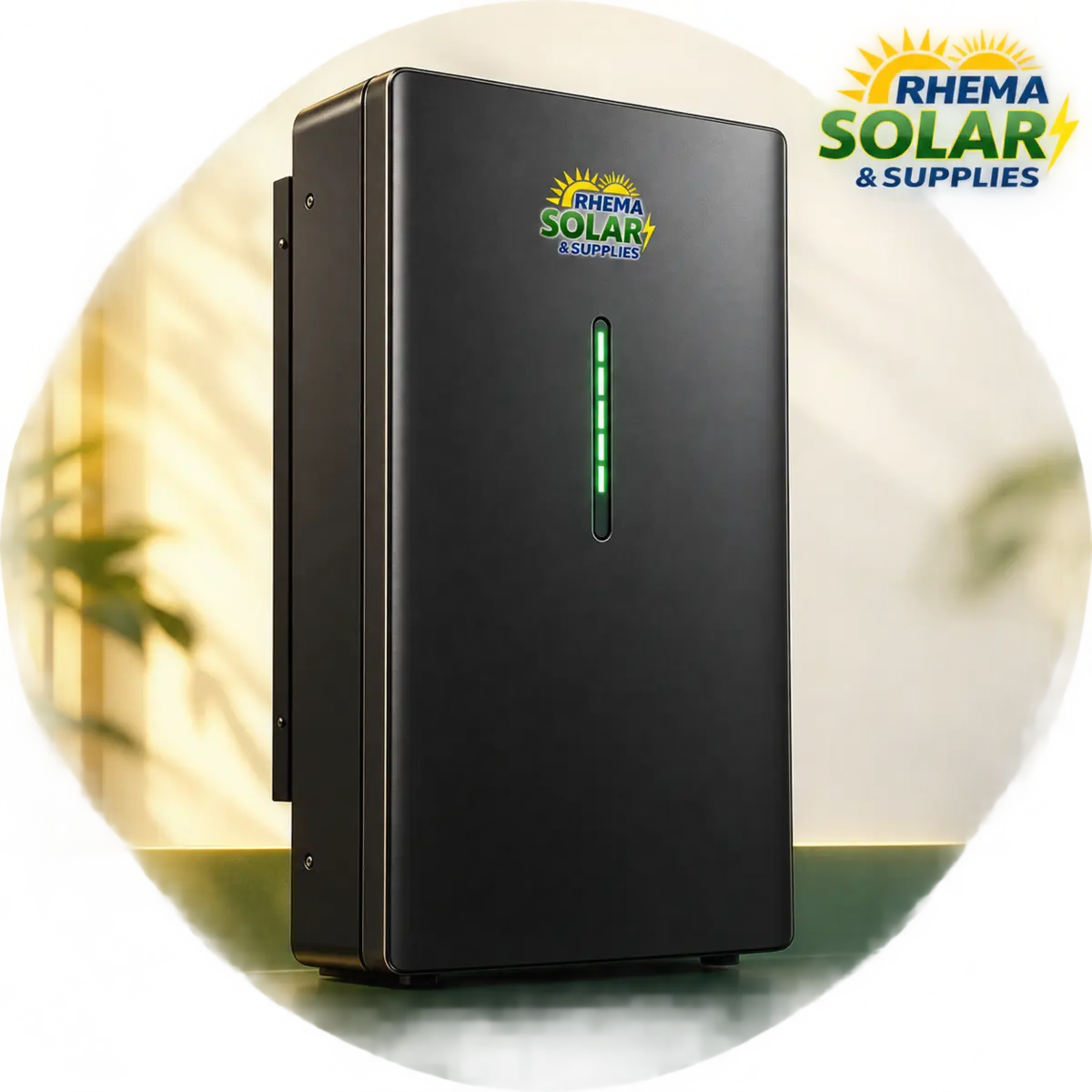
kW and kWh are different
Battery capacity is normally expressed in kWh. Its power or discharge rating is expressed in kW, or sometimes as current at a stated voltage. A battery with substantial energy storage may still be unable to supply a large simultaneous load.
Use usable capacity for planning
Nameplate capacity is not always the energy available to your appliances. Operating reserve, permitted depth of discharge, conversion losses and battery condition affect the practical result. Obtain the usable-capacity specification and the intended reserve setting for the exact model.
A transparent backup example
Suppose a hypothetical system has 10 kWh available after its planned reserve, and we assume 90% conversion efficiency. About 9 kWh reaches the AC loads. At a steady 1 kW load, the arithmetic estimate is nine hours; at 3 kW, it is three hours. These are illustrative calculations, not promises for a particular battery. Real loads cycle, sunlight may contribute, and the battery’s power limit still applies.
Check compatibility and installation conditions
Inverter communication, operating voltage and charge/discharge limits need verification. The mounting position must meet the battery manufacturer’s temperature, clearance, environment and safety requirements. Adding a second battery requires an approved expansion arrangement, not simply joining terminals.
Frequently asked questions
Can one battery run air conditioning all night?
It depends on measured consumption, operating hours, usable storage and power limits. An AC’s BTU rating alone does not answer the question.
Does more storage always provide better value?
Not necessarily. Compare the cost with the energy you can charge into it and the backup benefit you need.
Explore lithium batteries or request a load-based backup assessment.
Further reading
- Australian Government: Solar batteries
- Australian Government: Solar glossary
- U.S. Department of Energy: Solar and energy storage basics
General customer education. Final equipment selection and installation must follow site-specific design, applicable Jamaican requirements and the exact manufacturers’ instructions. Examples are illustrative.